The Role of Exterior House Cleaning in Preventing Dirt and Mould Buildup
Introduction
Rain, wind, airborne dust, and plant debris gradually mark a home’s exterior. Left unattended, grime can hold moisture against painted timber, masonry, and other finishes. Shaded, damp areas may also encourage mould growth, which can stain surfaces and signal persistent moisture. Regular cleaning removes deposits before they become harder to shift. It also gives residents a chance to notice drainage issues or surface damage early, helping protect the building’s appearance and condition.
Why Regular Cleaning Matters
Rain, wind, shade, and nearby trees leave residues on siding, paths, decks, and roof edges. For Auckland households, exterior house cleaning in Auckland can form part of a routine that clears grime before it settles into porous finishes. Regular washing also helps residents spot blocked drains, peeling coatings, or damp patches early. Choosing a suitable method matters, since excess pressure may damage paint, timber, seals, or mortar.
Where Dirt Collects
Dust settles on horizontal ledges, while leaves gather near roof valleys and downpipes. Pollen and fine particles can cling to rough cladding, textured concrete, and window frames. Areas beneath eaves may stay damp longer because sunlight and airflow are limited. These deposits can hide small cracks or worn paint. Checking such spots during routine maintenance helps identify buildup before it spreads across larger sections.
How Mould Gains a Foothold
Mould spores are common outdoors, but growth increases where moisture lingers and organic matter accumulates. North-facing walls, shaded decks, and overgrown garden edges may receive less sunlight and airflow. Leaking gutters or dripping taps can add a steady water source. Cleaning removes surface residue, while fixing leaks and trimming dense vegetation addresses conditions that support regrowth. A stain that returns quickly may point to an unresolved dampness problem.
Choose a Suitable Washing Method
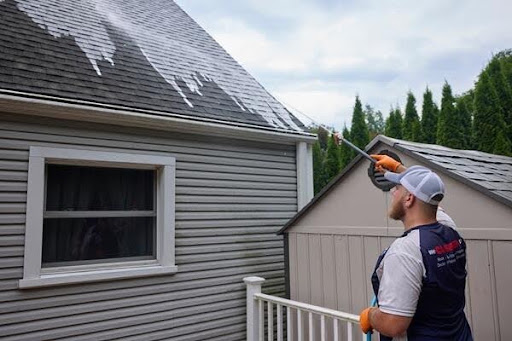
Different materials need different care. A gentle wash may suit painted weatherboards, while masonry can tolerate firmer brushing if its surface remains sound. High-pressure equipment can force water behind cladding, strip coatings, or erode soft mortar. Testing a small, hidden area first helps reveal how a finish responds. Following product labels and manufacturer guidance reduces the chance of damage during cleaning.
Keep Gutters and Drains Clear
Blocked gutters can overflow onto walls, soak fascia boards, and leave damp marks below the roofline. Leaves, seed pods, and grit also restrict water flow through downpipes. Clearing channels before heavy rain can reduce overflow and help direct water away from the building. Residents should check that drains carry runoff freely. Work at height requires suitable equipment and care, especially where ladders or slippery surfaces are involved.
Protect Plants and Nearby Areas
Cleaning products and loosened grime can run into gardens, lawns, or stormwater drains. Before washing, covering delicate plants and moving outdoor furniture helps prevent unwanted splashes. The chosen detergent should be suitable for the surface and used according to its label. Runoff should be managed carefully, particularly near waterways or planted borders. A controlled rinse can remove residue without sending large amounts of dirty water across the property.
Set a Practical Cleaning Schedule
A seasonal check gives residents a regular chance to assess walls, paths, gutters, and shaded corners. Homes beneath trees may need more frequent attention than properties with little nearby foliage. Local weather also affects timing, since long damp periods can leave surfaces wet for extended stretches. Cleaning before heavy seasonal rain can clear leaves and residue. A simple maintenance note helps households track completed tasks and recurring trouble spots.
Watch for Early Warning Signs
Dark streaks, green patches, peeling paint, and musty smells can signal a need for closer inspection. Bubbling coatings may indicate moisture beneath the finish, while persistent damp marks can point to leaks or poor drainage. Cleaning can improve visibility, but it cannot repair damaged cladding or stop water entering a wall. Residents should investigate recurring marks rather than repeatedly washing the same area.
Know When to Seek Help
Some jobs involve steep roofs, fragile finishes, or staining that resists gentle washing. A qualified cleaning provider can assess the surface and select a suitable approach. Before work begins, residents should confirm which areas are included, what products will be used, and how runoff will be handled. Clear expectations help protect gardens and building materials. Specialist advice is also useful when mould returns after cleaning or damage appears.
Conclusion
Routine exterior cleaning helps limit dirt deposits and removes material that can hold moisture against a home. Its value extends beyond appearance: regular checks can reveal blocked gutters, failing paint, or recurring dampness before those issues grow. The safest approach matches the method to each surface and addresses the source of persistent moisture. With a practical schedule and careful washing, households can keep exterior areas in better condition and reduce the chance of avoidable buildup.



Leave a reply
You must be logged in to post a comment.


