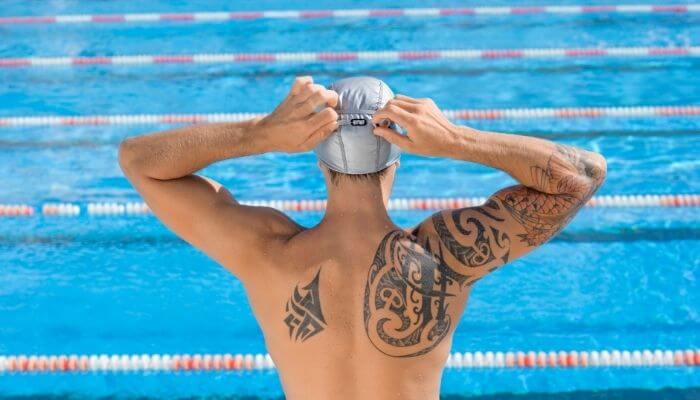
Understanding Your Tattoo
It is essential to fully understand the tattoo you are working with before waterproofing it. Water exposure requirements will vary depending on the tattoo’s age and location. These are some essential things to keep in mind:
Tips on Tattoo Care
Here are some tips to help you waterproof your tattoo while swimming.
- Use sunscreen.
- Use plastic wrap to protect your new tattoo.
- To seal the plastic wrap, use medical adhesive
- Do not swim for long periods with new tats.
- Take off the wrap.
- Always use a soft, clean towel to pat down any new tattoos.
- Wear loose-fitting clothing.
Waterproofing your tattoo can help prevent it from fading over time and keep it looking vibrant for many years.
Do not let your hard work go unnoticed – Here are some easy tips for waterproofing your tattoo for swimming.
Use sunscreen. Apply sunscreen to the tattoo before you go swimming. This will create a barrier between your skin & the water.
Plastic wrap can be used to cover your tattoo.
It’s wise to wrap your tattoo in plastic if you plan to spend a lot of time in the water. This will protect your tattoo from water damage and keep it from fading.
It seals the plastic wrap tightly so it doesn’t slip while swimming.
To seal the plastic wrap, use medical adhesive
Make sure to seal the plastic wrap tight. The adhesive should be evenly distributed around the plastic wrap’s perimeter. It would help to fill the plastic wrap tightly so water could not enter.
Do not swim for long periods with new tats.
The tattoo can fade or bleed if left in water for a prolonged period.
If you are swimming or spend a lot of time in the water, take a moment to give your tattoo some rest.
After you are done, towel it off and apply lotion to keep it looking new.
After swimming, remove the plastic wrap.
- Gently pull the edge of the plastic wrap nearest to your tattoo.
- Slowly, gently pull the plastic wrap off your skin.
Always use a soft, clean towel to pat down any new tattoos.
After swimming, wiping down the tattoo with a soft towel is essential. This will remove any chlorine or bacteria from your skin and prevent your tattoos from fading. Chlorine and bacteria are both terrible for tattoos.
Wear loose-fitting clothes
Remember that tight clothes can cause tats to itch and fade quicker.
Wear loose-fitting clothes that don’t rub against your tattoo if you plan to spend a lot of time in the water.
What is the best time to swim after getting a tattoo?
Swimming should be avoided for 14 to 28 days while your tattoo heals.
You can then float, but you must take extra care to protect your tattoo.
Age of your tattoo
Your tattoo may still need healing if it is not yet fully healed. It takes about 2-4 weeks for tattoos to heal. It is best not to submerge your tattoo in water during this time. This includes no swimming or hot tubs. After your tattoo has healed completely, you can begin waterproofing it to allow swimming.
Your Tattoo Location
Water exposure can be affected by the location of your tattoo. Tattoos on the skin’s most friction areas, like your hands and feet, can be more susceptible to peeling or fading. Regardless of where it is located, it is a good idea to avoid prolonged water exposure to tattoos.
How to waterproof your tattoo for swimming
Let’s look at how water can affect your tattoo’s response to water.
Use waterproof sunscreen
Use waterproof sunscreen to protect your tattoos while swimming. Before you swim, make sure to use sunscreen made for waterproof swimming. This will protect your skin from the harmful effects of water and the sun.
Waterproof Bandages: Make an investment
A waterproof bandage is a great way to waterproof your tattoos. These bandages create a watertight seal around your tattoo to protect it from water damage. Apply the dressing before swimming, and remove it when you are done.
A waterproof tattoo cover-up is an option.
A waterproof tattoo cover-up is another option. These products create a protective barrier around your tattoo from water and other elements. These products benefit those who plan to spend time in the water. They provide protection that lasts for a long time.
Keep your tattoo dry.
To protect your tattoo when swimming, it is essential to keep it dry. Consider covering your tattoo with a waterproof cover, such as a plastic wrap or a bandage. This will create a barrier between the water and your tattoo.
Avoid Chlorine
The effects of chlorine can cause tattoos to fade or peel. Avoid swimming in a chlorinated pool or limit your exposure to chlorine. If you swim in chlorinated pools, shower immediately and use a moisturizer on your tattoos.
Use sunscreen. Apply sunscreen to the tattoo before you go swimming. This will create a barrier between your skin & the water.
Plastic wrap can be used to cover your tattoo.
It’s wise to wrap your tattoo in plastic if you plan to spend a lot of time in the water. This will protect your tattoo from water damage and keep it from fading.
It seals the plastic wrap tightly so it doesn’t slip while swimming.
To seal the plastic wrap, use medical adhesive
Make sure to seal the plastic wrap tight. The adhesive should be evenly distributed around the plastic wrap’s perimeter. It would help to fill the plastic wrap tightly so water could not enter.
Do not swim for long periods with new tats.
The tattoo can fade or bleed if left in water for a prolonged period.
If you are swimming or spend a lot of time in the water, take a moment to give your tattoo some rest.
After you are done, towel it off and apply lotion to keep it looking new.


Leave a reply
You must be logged in to post a comment.

